Just launched a new podcast Ransom, you can listen and get links to subscribe at https://ransompodcast.com or listen to the first episode here:
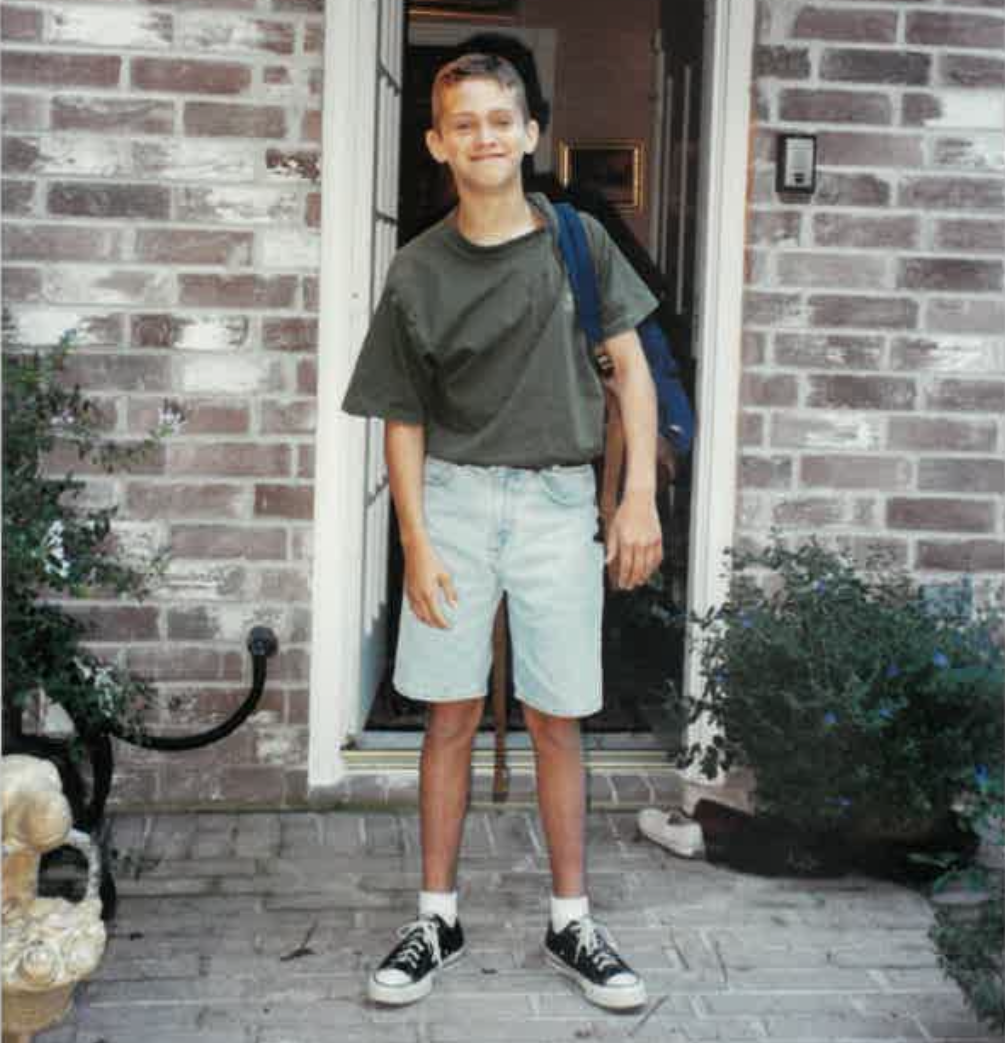
On September 12th, 1995, McKay’s father, Carl, returned home from an Amway meeting to find the door ajar and his 12-year-old son, McKay, missing.
The phone rang. A woman with a raspy voice said they’d kidnapped McKay and demanded $500,000. She said she’d call the next morning with details about how to pay the ransom.
But the ransom call never came.
This was just the first of many strange twists in the case, and the suspect that law enforcement ended up arresting shocked everyone.
But there are still many mysteries surrounding the case and McKay’s mother, Paulette, has doubts about the investigation, and decades later she still feels that justice was never served.
Of special interest to Neuroamer readers might be two psychological themes that the podcast touches on as it interviews doctors and explores the real-life manifestations of two poorly understood disorders: pathological gambling, and a very recent addition to the DSM prolonged grief disorder.
It’s hard to do this story justice in text, so please give it a listen:



Filed under: Uncategorized | Leave a Comment
Latest on Covid Origins
A recent FOIA request by Right To Know’s Emily Kopp yielded new information about Project Defuse, a DARPA grant proposal from 2018 to study bat-borne Coronaviruses that included Wuhan Institute of Virology researcher Shi Zhengli.
The newly released documents, show collaborators’ internal notes on drafts of the grant proposal, which yielded two small revelations:
- The grant proposal tried to downplay the involvement of the Chinese collaborators doing bioengineering work, because the scientists thought DARPA would be less likely to fund the project if they thought that work was occurring in China.

Some had previously dismissed Project Defuse as irrelevant, because these bioengineering experiments were proposed to be done at Ralph Baric’s lab at UNC, and it was claimed that Shi’s lab didn’t have the expertise or equipment to preform these sorts of experiment, but the grant shows Shi’s lab has the capabilities and interest. - The language originally listed work that could be performed at BSL-2 to save money compared to other viral models.

This is important because it shows that scientists involved in writing this grant thought that it was indeed appropriate to perform these risky experiments at low biosafety levels. And because these experiments would not be performed at BSL-2 in American labs, it adds evidence to the idea that despite what was written in the final grant proposal, the team was planning to do these experiments in China.
I was curious how people were reacting to these revelations and the state of the covid origin debate since I hadn’t checked in for a while, and I came across the rootclaim covid origins debate. It’s a long watch, and I learned a little, but it was disappointingly low quality.
The debate into Covid origins online has been poisoned by tribalism and conspiracy theorists, and I was hoping this debate would be a forum, where debaters could actually present and discuss the best arguments for Covid’s most likely origin.
At the beginning they make a disclaimer about how they aren’t subject matter experts, but with an issue like the origin of covid that needs to incorporate and evaluate multiple factors like biology, politics, statistics, epidemiology — what really matters is your approach. Sure, I’m on board so far. But man were they not subject matter experts — both debaters showed little understanding of biology and how wet lab research works.
On the Zoonotic side, Peter Miller seems terminal online and imagines himself a crusader against Steve Bannon and scientific misinformation, while spreading misinfo himself. He spent a lot of time straw-manning conspiracy theorists who promote the lab leak — yes many conspiracy theorists promote the lab leak (gasp) — but that has zero impact on Covid’s origin.
On the lab leak side, Saar Wilf, wanted to hawk his “probabilistic inference” system and then got super hung up on a pet theory about a Majong Room. And because he has no experience with biology or much interest in the lab leak theory in general, he didn’t even attempt to challenge Peter’s bogus claims. I guess that was the role of Yuri Deigin in the 2nd debate, who *checks notes* is a former programer who works on the business side in biotech?
Most of the debate consisted of Peter Miller confidently asserting things — which sometimes made sense and seemed on point — but just as often and just as confidently, he’d assert things that were completely factually incorrect.
For example, at 1:02:50 in the second debate, Miller claims that Sars Cov 2 could not have leaked from animal passaging experiments in humanized mice because it always acquires a mutation to its spike, N501Y.
To support this he shows this figure, without any context:

The first sign that something’s off, is that Peter doesn’t provide a citation or a figure caption. Weird, well, okay — I had to try a couple google searches before I found the article this figure is from because even just based on the title, it’s so obviously different from how Peter described it: Adaptation of SARS-CoV-2 in BALB/c mice for testing vaccine efficacy.
It’s not a paper passaging SARS-CoV-2 in humanized mice, it’s a paper passaging SARS-CoV-2 in wildtype mice to create a new strain of SARS-CoV-2 that infects wildtype mice as an experimental model.
The ongoing coronavirus disease 2019 (COVID-19) pandemic has prioritized the development of small-animal models for severe acute respiratory syndrome coronavirus 2 (SARS-CoV-2). We adapted a clinical isolate of SARS-CoV-2 by serial passaging in the respiratory tract of aged BALB/c mice. The resulting mouse-adapted strain at passage 6 (called MASCp6) showed increased infectivity in mouse lung and led to interstitial pneumonia and inflammatory responses in both young and aged mice after intranasal inoculation. Deep sequencing revealed a panel of adaptive mutations potentially associated with the increased virulence. In particular, the N501Y mutation is located at the receptor binding domain (RBD) of the spike protein. The protective efficacy of a recombinant RBD vaccine candidate was validated by using this model. Thus, this mouse-adapted strain and associated challenge model should be of value in evaluating vaccines and antivirals against SARS-CoV-2.
To their credit, in the following debate judges pushed him on his claim, asking him does this N501Y mutation always emerge when passaging SARS-CoV-2 in humanized mice — or was it just one study. Multiple studies Miller claimed, making his confusion harder to justify. I get making this mistake once, but now it sounds like you’re just skimming papers, guessing what they’re saying, and getting it very wrong.
And this isn’t a trivial issue, we know from the Defuse grant proposal that Shi Zengli’s lab has humanized mice (transgenic mice that express human Ace2 receptor) — And as mentioned in proposal, we know they were interested in isolating samples with novel SARSr-CoV, and that they have previously tested strains in humanized mice: “we have shown evidence of recent spillover of SARSr-CoVs into people in China, and have isolated strains capable of producing SARS-like illness in humanized mice.”
All it takes to leak SARS-CoV-2-like virus in the wild, giving it to a humanized mouse, and a lab tech breathing air in the mouse facility or any one of things off of the assumption that it isn’t a highly-transmissible airborne disease (as they were clearly assuming by their proposal to do these experiments in BSL-2).
So you’re back to the original debate of the two coincidences. Is it a bigger coincidence that the first known superspreader event occurred at a wet market with wild animals, or is the bigger coincidence that SARS-CoV-2 emerged in the same city as the lab that had collected what was at that time SARS-CoV-2’s most closely-related genetic sample, had written a proposal a couple years earlier to collect and chararcterize new SARS-related coronaviruses.
Neither side has a smoking gun and probably never will. The decision to cull possible animal reservoirs, and then delays in testing the Huanan Seafood Market may have made it impossible to find the truly killer evidence in support of zoonosis. But China’s lack of transparency, repressive government and hostility towards investigative journalism make it difficult to know to what extent our picture of the early cases is accurate, and to determine whether the seafood market was the site of the spillover or whether it was an early super-spreading event.
In some ways Covid’s origin is an important question: if it was a zoonotic spillover at the Huanan Seafood Market, then we need more research into these rare emergent diseases, and we need to shut down exotic animal markets around the world. If it was a lab leak, we need higher levels of biosafety and we need to consider the risk-benefit of researching these diseases more carefully, and we probably shouldn’t be doing research on unknown and risky diseases in one of the biggest population centers in the world.
But the true answer is we need both. We need to take zoonosis more seriously, and we need more research into the diseases that could cause the next pandemic, but we need to take biosafety as seriously as we take nuclear security. And that doesn’t just mean strictly vetting grants and conducting research at higher bio-safety levels, but designing systems that carefully track and log the movement of infectious agents, with strong safeguards in place to protect both from accidental release or intentional release by bad actors.
In 2001, a mentally ill American scientist working on an Anthrax vaccine was going to be moved to another project. But he really believed in his vaccine, that Saddam Hussein had anthrax bioweapons, and he was very mentally ill, so he sent letters with anthrax to the media and Congress. And, at first, his plan “worked” in that there was a lot of renewed interest in Anthrax and his anthrax vaccine.
We know this now because of the tight security we keep around anthrax — transfer between labs were recorded, the amount used from every vial was tracked, key cards in and out of storage rooms were logged.
The pandemic has shown us that a novel pathogen can be orders of magnitude more deadly than highly restricted pathogens like anthrax, and orders of magnitude deadlier than atom bombs.
We shouldn’t just trust that people to handle these sorts of diseases properly. We don’t do it with anthrax and we don’t do it with nuclear weapons.
We should could create a world where we don’t have to debate a lab leak because any lab studying a disease like covid is regulated and documented by an international body that would leave us zero doubt about what they were studying, when, and why.
Filed under: Uncategorized | Leave a Comment
Semaglutide (Ozempic/Wegovy) is part of a class of drugs that mimic the action of the peptide GLP-1, a hormone that’s secreted from the small intestine in response to food.

GLP-1 and drugs that mimic it’s actions like the ‘glutides’ have many actions throughout the body, but the most important direct effects are thought to be on the brain, pancreas and stomach.
The ‘glutides’ were originally developed as treatments for Type II diabetes. By decreasing appetite and slowing digestion they attenuate the amount of glucose entering the bloodstream. And by increasing insulin secretion and decreasing glucagon, they help get excess glucose out of the bloodstream.
In 2014, the FDA approved Liraglutide (Saxenda/Victoza) to treat obesity in adults. In 2021, Semaglutide was similarly approved. Semaglutide is preferable to some patients, because it only requires weekly injections compared with liraglutide’s daily ones.
Recently, these drugs are in the news, in part, because in January of this year (2023) semaglutide joined liraglutide as FDA-approved for treating obesity in children 12 and older. A week later, the American Academy of Pediatrics published a Clinical Practice Guideline to the Evaluation and Treatment of Children and Adolescents with Obesity, which includes a section on pharmacotherapy (drugs) for treating obesity:

The AAP didn’t single out the ‘glutides’ drugs, but of those listed, the ‘glutides’ and orlistat are the only that have been approved for long-term use in children with typical obesity, and the AAP points out that patients don’t like taking orlistat because it causes fatty stools, flatulence, and the runs.
So who is the AAP recommending doctors offer ‘glutides’ to? The same group studied in clinical trials, kids 12+ with a BMI above the 95th percentile. But confusingly, this doesn’t mean the fattest 5% of kids, but rather the top 20%.

What is considered obese is determined differently for children and adults. Whereas the threshold for obesity is defined as 30kg/m2 in adults, in children it’s set at the 95% percentile — according to historical data of children’s weights from 1963 to the early 1990s (a period when overall children were less likely to be overweight).
Today around 20% of children are considered obese by this metric. Another way of saying that is children are 4 times as likely to be obese today than they were in 1980.
And so when we say that semaglutide is approved for children with a BMI at the 95 percentile, we really mean 20% of children today. And while pediatricians are being recommended to offer that drug, that doesn’t mean that it is recommended for 20% of children, but rather the AAP is recommending that doctors initiate a conversation about the drug with their patients and let the patients and their families decide if the benefits outweigh the risks and unknowns.
Semaglutide does appear effective at helping certain children lose weight. The clinical trial that led to its approval, used children with a mean age of 15 and a mean BMI of 37 that had failed at least one attempt to lose weight in the past. (So the average child in that study is literally of the chart shown above.)

Those patients lost −16.7% of their BMI compared to controls. While that’s huge, it’s important to note that weight loss appears to plateau around 44 weeks, and even after this treatment most of these patients would still be considered obese, with a BMI of around 31.
How effective the drugs will be for patients with lower BMI remains to be seen.
The main side effects of the ‘glutides’ are gastrointestinal, like nausea, vomiting and diarrhea, which does beg the question — how much of the weightloss is due to the side effects making eating unpleasant?

However, the FDA has placed a black box warning on the drugs for risk of certain cancers, because rats treated with the drugs had higher rates of thyroid and pancreatic cancers; therefore, the FDA recommends against using them in patients with a personal or family history of medullary thyroid cell cancer or multiple endocrine neoplasia syndrome type 2a or 2b.
Overall, these drugs seem useful for treating extreme obesity but they are far from magic bullets. The truth about obesity is that once pathological processes start, they are very hard to permanently reverse through lifestyle modification, psychotherapy, or even bariatric surgery.
The best bet for solving the obesity crisis is preventing obesity from occurring in the first place. Obesity emerged as a crisis in the 20th century, alongside changes to our environment like the widespread availability of cheap healthy food, and changes to our culture around food and exercise. Solving the crisis will require us to reverse these changes, as messaging and education around healthy lifestyles have proved ineffective.
But perhaps drugs like the ‘glutides’ can ameliorate some negative health effects in children and adults who’re already obese.
Filed under: Uncategorized | Leave a Comment
Recently, KSL paid for me to attend the 2022 Investigative Reporters and Editors conference in Denver.

IRE has a lot of workshops on data journalism, beat-specific seminars, and career advice, but I chose mainly to primarily attend lectures on finding government records through FOIA and its state law equivalents.
Working in true crime podcasts, public police records and court documents are crucial to researching a story, and archival audio can really bring a story to life, but I really think these tips and tricks are useful to anyone doing investigative journalism.
Does it exist in open records?
Some states or agencies, automatically collect certain records and publish them online. For example, here are the open records from Utah’s department of public safety.
Do you know what you’re looking for and who has it?
If so, make a public records request. It can be helpful to look up the particular public records act for the place you’re requesting from and try to find a template specific to their statutes:
To continue reading this post, go to my new podcast and journalism-specific blog at benkuebrich.com/blog
Filed under: Uncategorized | Leave a Comment
As I lay on my couch, shirtless and cold but sweating from my first Covid booster shot, I got a push notification about a Wired article: New Covid Drugs Are Here — and They Could Change the Pandemic
The article highlights the benefits these drugs could bring to the third world, where the logistics of delivering fussy mRNA vaccines that have to be kept frozen has been difficult. But what does these drugs mean, for countries like the US. Where the risk of breakthrough infections, have even the vaccinated feeling hesitant to return fully to normal.
Continue reading ‘Will new antivirals bring us into a new phase of covid risk-mitigation and effectively end the pandemic?’Filed under: Uncategorized | Leave a Comment
Check out my new podcast!
On Tuesday I launched a new podcast, Algorithm!

Algorithm is about a journalist who created an algorithm to use homicide data to try to identify serial killers. His algorithm flagged a suspicious number of unsolved strangulations in Gary, IN and he reached out to them to warn them they might have a serial killer on their hands. But they ignored him, until four years they arrested a serial killer who confessed to a string of nearly identical crimes.
It’s a wild and twisting story and one that I think really combines my skillset as researcher from working in science and working as a reporter, with the skillset I’ve learned as a true crime producer of doling out a story with cliffhangers and surprises.
Two episodes are out now, with new episodes released each Tuesday. You can click this link to go to the podcast, then click on Episode 1 “Afrikka Didn’t Need to Die.” And hit the follow/subscribe button. If there’s another podcatcher you prefer to use, here’s the link to the RSS.
It’s the first podcast like this that I’ve ever fully written and hosted, and I’m also the lead producer. Not sure who still follows this blog, but would love for you to listen and would love to know what you think!
Filed under: Uncategorized | Leave a Comment
A century in a day
I’m momentarily fascinated by the notion of copyrights and the public domain. The freedom of information and availabilty of it.
A quick google search brought me to The Robesonian from October 29th, 1920. It’s a small, sparse paper from Lumberton, North Carolina. Just four pages, the only images are in the ads.
1920 was an election year, and many of the headlines reflect this: Wilson Makes Appeal for League, Do The People Want a Change?, Vote for Income Tax ammendment.
But the lead story is a local tragedy:
Shot in Head with Air Rifle.
Thomas Johnson, Jr., Accidentally Shot himself Yesterday When He and Other Small Boys Were Playing–town Board Proposes to Prohibit Children Under 15 Shooting Air Rifles in Town
Thomas Jr., 9-year-old son of Mr. and Mrs. T. L. Johnson, accidentally shot himself in the top of the head with an air rifle late yesterday afternoon. The shot–a large buckshot–entered the top of his head and lodged in his skull. The Johnson boy and a number of other boys about the same age were playing with air rifles near the fair ground when the rifle was discharged. Dr. H. M. Baker rendered medical attention and it is not thought the wound will prove serious.
As a result of the accident the town commissioners are planning to pass an ordinance prohibiting children under 15 years old from shooting air rifles in the town of Lumberton.
I was hoping to follow up and see if there was a later article written about such an ordinance being written, but even this article failed to show up in my search using the terms: robensonian and rifle.
Time travel has it’s limits.
Filed under: Uncategorized | Leave a Comment
This post is a follow-up to the post Gimlet’s unofficial reading list for making good podcasts
Just got finished Make Noise by Eric Nuzum, the podcast developer who helped guide shows like Invisibilia and Where Should We Begin. Make Noise was a super-quick read. I tore through it in two days.

The book advises creatives on how to think about a show and make it a hit. It delves into the actual craft of producing an audio story, but also advising on how to pitch a story, market a show and build an audience. And it gives advice that will apply to seasoned audio-makers and novices, those working for large networks and independents. There’s a lot of history of public radio and podcasting thrown in as well.
Anyways it was a good and quick read — definitely some stuff to think about and a new perspectives compared to the podcasting books I’d previously read and written about.
The book also had a “recommended reading” section, some of which piqued my interest, so I’ll include here. It’s a combination of books on making podcast/radio stories and once more broadly about storytelling and story structure.
To be clear, I haven’t read these, so I’m going on faith from Nuzum’s recommendation, but I just ordered all of them so ‾\_(ツ)_/‾
(Also, did you guys know that shrugging guys face is the character for “Tsu” in the Japanese katakana alphabet?)
 |
Radio Diaries: DIY Handbook (2017)
By Joel Richman (of Radiodiaries fame) and Jay Allison (the Moth, Transom) |
 |
The Writer’s Journey (2007)
by Christopher Vogler (USC film school, worked on the Lion King?) |
 |
Making Waves (2008)
By Mark Ramsey (Inside Jaws) Nuzum says, “Ramsey has been a provocative thinker about radio and podcasting for many years.” My question: Do you think Ramsey drew the cover art himself? |
 |
Story Craft (2011)
By Jack Hart (The Oregonian newspaper) |
 |
You Can Write a Novel Kit (2008)
By James V. Smith Jr. |
 |
Save The Cat! The Last Book on Screenwriting You’ll Ever Need (2006)
By Blake Snyder |
Also, apologies for not posting for a year and a half! think I was inspired by the book and the history of how podcasting emerged from blogging. These days I’m working on a true crime documentary show Monster: DC Sniper I’m really into the puzzle of figuring out how to structure a long multi-part series, so if you have any recommendations on story-structure kind of stuff, please let me know!
Filed under: Uncategorized | 1 Comment
As I’m now working at an NPR station, but I was never formally trained in journalism, I decided to look up what I missed out on. Here are the introductory textbook’s used by 5 of America’s top journalism programs:
|
Textbook / Book |
Program | New | Used | |
 |
Who, What, When, Where, Why by James Glen Stovall | Emmerson College | $121 |
$7 |
 |
Blur: How to Know What’s True in the Age of Information Overload by Bill Kovach and Tom Rosenstiel | UT Austin | $12 | $8 ( Free audiobook with audible trial ) |
 |
Inside Reporting by Tim Harrower | Northwestern | $100 | $71 |
 |
Writing and Reporting the News by Carole Rich | NYU | $130 | $60 |
 |
The News Media: What Everyone Needs to Know by C.W. Anderson, Leonard Downie Jr., Michael Schudson. |
USC |
$13 | $6.64 |
Other texts that showed up in syllabi: The Associated Press Stylebook and America’s Best Newspaper Writing by Roy Peter Clark
Anyways, if you’re interested in teaching yourself journalism, this might be a place to start. This probably also doubles as a list of books to give as a gift to a journalism major or a young aspiring journalist.
Also of interest, might be the unofficial recommended reading list from Gimlet Media, which pertains specifically to making narrative audio documentaries and NPR-style pieces.
And if there’s a good book for young journalists that you want to recommend that wasn’t on this list, please mention it in a comment!
Filed under: Uncategorized | 1 Comment

The Journal of the American Medical Association, or JAMA, is launching a podcast app designed to help doctors to listen to educational content and take quizzes on what they learn.
By listening to these podcasts and taking the accompanying quizzes, medical professionals could earn Continuing Medical Education (CME) credits, which are needed for licensing requirements.
JAMA is advertising podcasts as a way for busy people to earn these credits: “Morning time. Commute time. Lunchtime. Workout time. Your time.”
Potentially this app will work on one of podcasting’s biggest strengths as an educational tool, allowing listeners to multitask and learn on the go. And, by incorporating quizzes the app may compensate for one of its weaknesses — the ease with which one can space out and miss important details from a piece of audio.
Likely the popularity of this tool will depend on the quality of the podcasts produced. I’ve heard a fair share of medical podcasts where people just read out articles and listing facts in monotone voices. However, the most widely shared and popular learning tool when I was a medical student was Dr. Goljan’s audio lecture series. (I’d wager Goljan has had more impact on medical education than any other doctor in his generation.)
A successful podcast, that can hold a tired person’s attention as they work out or commute will require an effective host like Goljan that can use some humour and flair to regain listener’s attention before key points and transitions and make points stick in their mind.
I strongly believe that the university system and medical education are sorely outdated. At hundreds of schools across the nation, similar lectures are given year after year, often by professors only lecturing out of an obligation to their department. The majority of schools now record these lectures, and at many schools, the majority of students, don’t attend class, they just watch the lectures so they can pause, repeat, slow down or speed up the content.
It’s time we decide these subjects are important enough that we devote the resources to make high-quality courses that can be shared between schools and across the world. Courses that not only incorporate the experience of top medical lecturers but also storytellers and documentarians. They should be founded in psychological theory, and variants could be tested using A-B testing and quizzing to optimize medical education. They should be accompanied by a comment section where the top questions and resources could be posted, voted upon, discussed.
Unfortunately, medical education, especially pre-clinical education, is often an after-thought — an obligation, not a priority. Schools are unlikely to take on a project like this, but perhaps a new generation of supplementary educational materials, like Goljan’s lectures, or the Pathoma video series could emerge — if they did, whoever made them would do the world a lot of good and make a lot of money off of the tens of thousands of allied health students looking for any advantage on their high-stakes exams.
Filed under: Uncategorized | Leave a Comment
 Ben Kuebrich


 Neuroamer